The Samurai Who Came to Kill Him — St. Nicholas of Japan and Paul Takuma Sawabe
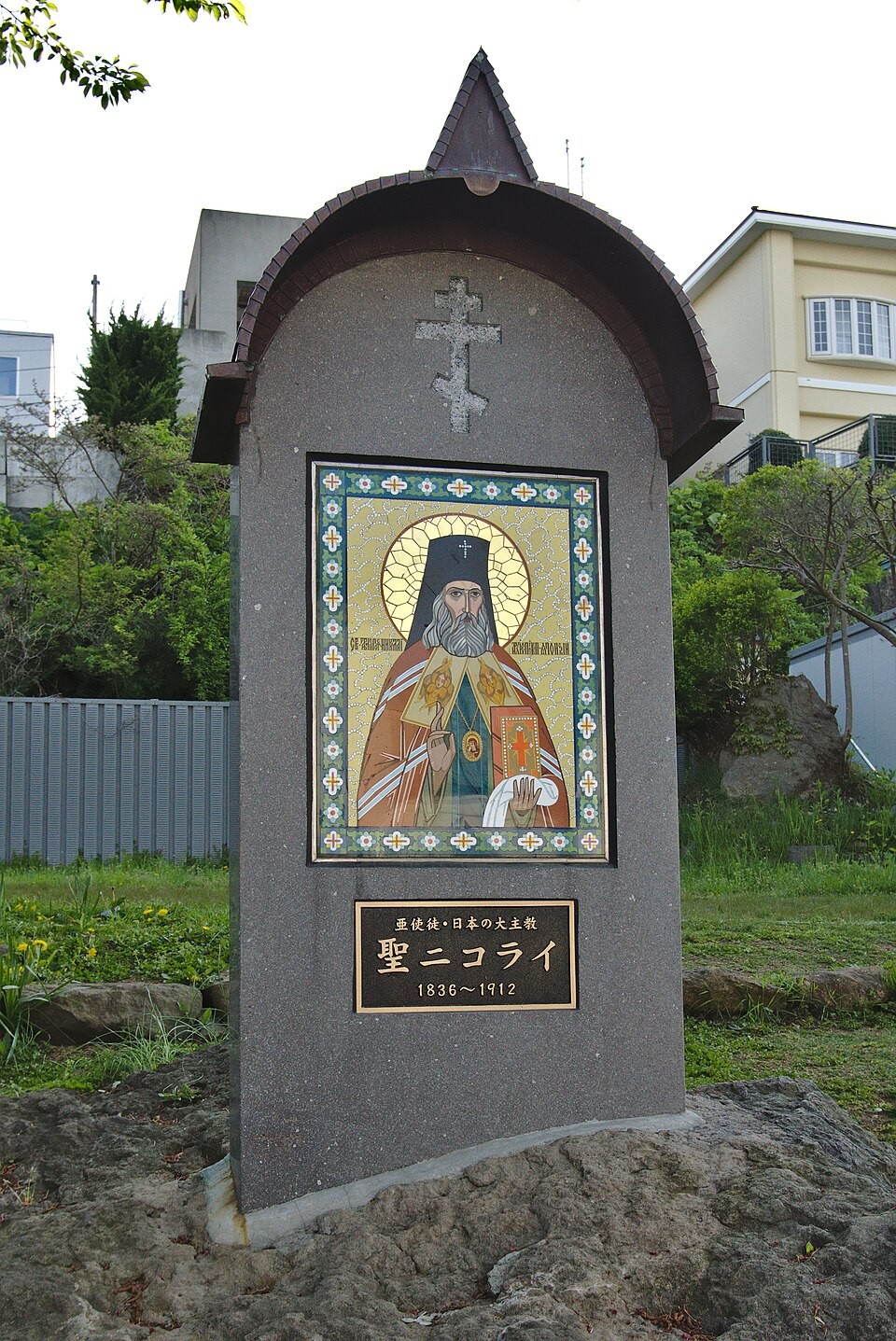
In 1861, a young Russian hieromonk named Nicholas Kasatkin arrived in the port town of Hakodate, Japan, to serve as chaplain to the Russian consulate. Rather than begin preaching right away, he spent his first years quietly mastering classical Japanese, Japanese history, and the country’s customs and religions — preparing, as he put it, to speak to the Japanese people as one who understood them, not as a foreigner imposing something alien.
It was a wise preparation, because Japan in the 1860s was in no mood for foreign religion. The country was living through the turbulent final years of the Tokugawa shogunate, and Christianity was still officially a capital offense — a relic of the ban imposed two centuries earlier after Japan’s brief, bloody experience with foreign missionaries. Into this climate stepped Takuma Sawabe: a trained swordsman, the adopted son of a Shinto priest, and the leader of a group demanding the expulsion of foreigners from Japan. Sawabe saw Christianity as exactly the kind of foreign threat his country needed to be defended against.
In 1865, he decided to do something about the Russian monk personally. Sawabe went to Nicholas’s door armed with his sword, intending to kill him before he could preach a single sermon.
What happened instead is the reason this story has been retold for over 150 years. Nicholas did not turn him away or call for help — he engaged him. He asked Sawabe, a man who prized the samurai code of honor above almost everything else, how a true warrior could justify condemning and destroying a teaching he had never actually taken the trouble to study. It was a question aimed squarely at Sawabe’s own values, not against them, and it worked. Sawabe agreed to hear Nicholas out — and the conversation that followed changed the direction of his life.
Three years later, on April 12, 1868 — while conversion to Christianity in Japan was still, on paper, punishable by death — Nicholas baptized Sawabe along with two companions, Sakai and Urano, giving them the names Paul, John, and James. They were the first three Japanese converts to Orthodox Christianity. Paul Sawabe did not stop there. He went on to preach in secret, travel to spread the faith as far as Sendai, and endure arrest and persecution as Japan’s small Orthodox community grew under continued suspicion. On July 12, 1875, he was ordained a priest — the first Japanese Orthodox priest — and continued serving the growing Church for the rest of his life.
Nicholas, meanwhile, continued the work that would eventually place a cathedral on a hill in central Tokyo. The Holy Resurrection Cathedral — known to this day as Nikolai-do, “Nicholas’s Hall,” after him — was consecrated in 1891, the work of the mission Nicholas had built from nothing over three decades, with Paul Sawabe among the Japanese priests who had given that mission its first native voice.
Nicholas died on February 3, 1912, at 76, having spent more than half a century in Japan. His funeral is remembered as the largest ever held for a foreigner in the country, with ordinary Japanese citizens lining the streets of Tokyo to see him off — a striking tribute to a missionary who had once been seen as exactly the kind of foreign threat Sawabe had sworn to stop. Among the wreaths that arrived at the cathedral that day was one sent by the Emperor Meiji himself, a quiet sign of how far the suspicion of 1865 had traveled in less than fifty years.
The Holy Synod of the Moscow Patriarchate canonized Nicholas on April 10, 1970, as Saint Nicholas, Equal-to-the-Apostles, Enlightener of Japan — the founder of a Japanese Orthodox Church that traces its roots directly back to that first, nearly fatal, encounter with a samurai who came to kill him.
Sources and further reading
- Saint Nicholas, Enlightener of Japan — Orthodox Church in America
- Paul Sawabe — OrthodoxWiki
- The Conversion of a Samurai — Journey to Orthodoxy
- Enlightener of Japan — Blessed Nicholas Kasatkin, The Archives of Orthodox America
© Portal Pascha. This is original content — please share by linking to this page rather than reposting the full text elsewhere.
Comments