
Estonian Orthodox Composer Arvo Pärt Awarded the 2026 Goethe Medal
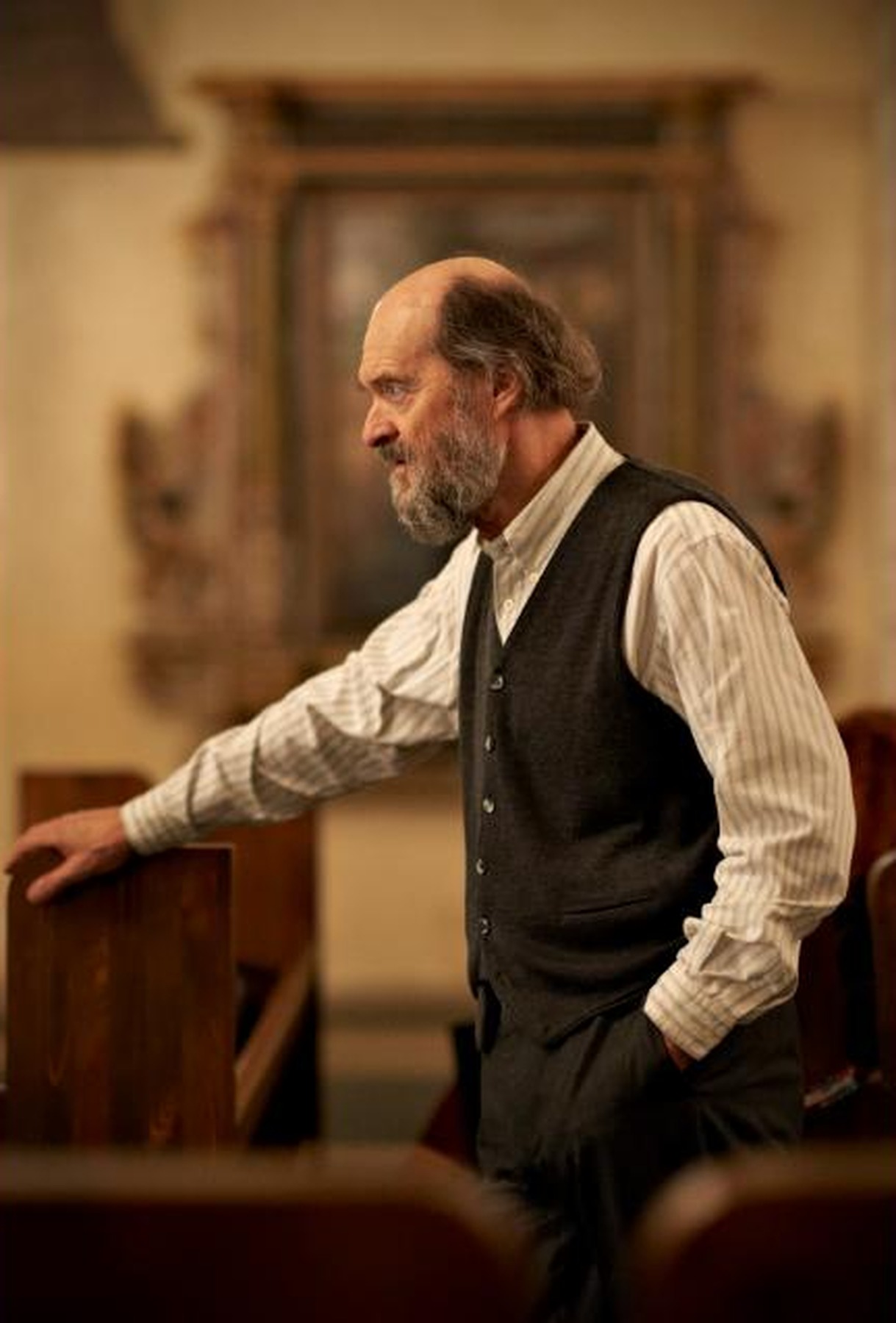
Estonian composer Arvo Pärt, one of the most influential living figures in contemporary music and an Orthodox Christian whose faith has profoundly shaped his artistic work, has been awarded the 2026 Goethe Medal, one of Germany's most prestigious cultural honors.
The medal was presented in Weimar on August 28, the birthday of Johann Wolfgang von Goethe. Pärt was honored alongside Italian translator Anita Raja and Greek theatre director Prodromos Tsinikoris. The Goethe-Institut describes the medal as the most important distinction of Germany's international cultural policy.
Because Pärt was unable to travel to Germany, his son Michael Pärt received the medal on his behalf. Michael conveyed his father's gratitude and reflected on the years the Pärt family spent in the German-speaking world after leaving Soviet Estonia in 1980.
The recognition is particularly significant because Pärt's international artistic achievement cannot easily be separated from his spiritual journey.
Born in Estonia in 1935, Pärt became one of the leading young composers of the Soviet avant-garde. But his increasingly explicit Christian convictions eventually brought him into conflict with the officially atheistic Soviet cultural establishment.
His 1968 composition Credo, with its open confession of faith in Jesus Christ, provoked controversy and was effectively banned. During the years that followed, Pärt entered a long period of artistic and spiritual searching. In 1972 he joined the Orthodox Church.
Out of that period eventually came the musical language for which he became internationally famous: tintinnabuli, from the Latin word for "little bells." It is characterized by extraordinary simplicity, silence, restraint, and carefully ordered relationships between musical voices. Yet for Pärt, this was never merely a technical system. The Arvo Pärt Centre describes the approach as connected to Christian values, religious practice, and the search for truth, beauty, and purity.
One of the clearest expressions of this style is Spiegel im Spiegel (1978) — read more at the Arvo Pärt Centre.
Many of his compositions draw directly upon Christian and liturgical texts. They include Passio, Te Deum, Miserere, Kanon Pokajanen, and Adam's Lament. The majority of his vocal works are rooted in Scripture, prayer, or the liturgical tradition of Christianity.
The Goethe Medal jury specifically praised Pärt for developing a musical language capable of touching and connecting listeners throughout the world, highlighting works such as Für Alina, Tabula Rasa, and Spiegel im Spiegel. The jury also emphasized the unusual combination of spirituality and structural depth found in his music.
Pärt's relationship with Germany is itself an important part of his story. After increasing pressure from Soviet authorities, Pärt and his family left Estonia in 1980, initially settling in Vienna. A scholarship later brought them to Berlin, where the family lived for almost thirty years and where his music gained an increasingly international audience.
At the Goethe Medal ceremony, Michael Pärt remembered that period with words his father had once used about arriving in the West: "We had not arrived among strangers."
On the evening of the award ceremony, Pärt's Fratres opened a concert in Weimar performed by the Staatskapelle Weimar and the STÜBAphilharmonie.
For Orthodox Christians, Pärt's recognition has an additional significance. His music demonstrates that an unmistakably Christian artistic vision need not retreat from the contemporary world in order to remain faithful. Pärt did not abandon modern musical language. Instead, through years of silence, prayer, study, and spiritual searching, he found a way to create within it while remaining deeply oriented toward God.
Perhaps this is why his music can be heard in concert halls throughout the world while still carrying something reminiscent of prayer.
In an age often filled with noise, Pärt has made silence itself part of the music. And in a cultural environment where Christian faith can easily be treated as belonging only to the past, one of the world's most respected contemporary composers continues to show that faith can still give birth to profound and genuinely new artistic expression.
© Portal Pascha. This is original content — please share by linking to this page rather than reposting the full text elsewhere.